 Skip to content


Berberine UK Capsule: Research, Uses and Buying Checks
Have you heard the buzz about berberine? Maybe you have seen it discussed online or heard people talking about berberine capsules, especially when comparing a Berberine UK Capsule. As more people research plant-based supplement options, berberine has become a common search topic across the UK supplement market.
If you are comparing natural supplement ingredients, you might be wondering what a Berberine UK Capsule actually is, what researchers are studying, and how to tell the difference between a clean formula and a filler-heavy capsule. This guide keeps the focus on berberine, product quality, safe comparison and what shoppers should check before buying.
What Exactly is Berberine?
Berberine is not something synthesised in a lab for marketing effect. It is a bioactive alkaloid found in several plants. It can be extracted from the roots, stems, rhizomes and bark of plants such as European Barberry, Oregon Grape, Goldenseal, Phellodendron and Coptis. These natural origins are part of why a Berberine UK Capsule attracts attention from people comparing plant-based supplement ingredients.
Berberine is known for its bright yellow colour. Historically, berberine-rich plant material was used for colouring materials such as wool and leather. Its place in traditional practices is also one reason it remains a popular topic in modern supplement research.
Traditional Chinese Medicine and Ayurvedic traditions have used berberine-containing plants for a long time. Modern readers, however, need a more careful view: traditional use can provide context, but it does not replace modern product quality checks, safety guidance or professional advice where medication or medical conditions are involved.
How Does Berberine Work in the Body?
So, this plant compound, how does it actually get discussed in research? Modern studies often focus on how berberine interacts with cellular pathways linked with energy handling and metabolism. One of the main mechanisms discussed is AMP-activated protein kinase, usually shortened to AMPK.
AMPK is often described as a cellular energy sensor. When activated, it is involved in processes that help cells manage energy production and energy use. This is one reason berberine appears in research conversations around metabolic markers, glucose handling, lipid metabolism and broader cardiometabolic topics.
Beyond AMPK, researchers also study berberine in relation to gene expression, mitochondrial function, oxidative stress pathways and the gut microbiome. These are research areas, not promises. A sensible approach is to treat berberine as a supplement ingredient with active research interest, not as a replacement for diet, lifestyle or medical treatment.
For a balanced external overview, WebMD explains berberine as a plant compound used in supplement form and discusses possible side effects and interactions, which is useful when comparing berberine capsules carefully. Read the WebMD berberine overview.

What Does Research Currently Explore?
Activating cellular enzymes and influencing metabolic pathways sounds technically interesting, but the practical question is what researchers are actually studying. Berberine appears in studies covering several metabolic and supplement-use topics, including glucose markers, lipid markers, weight-management research, gut microbiome interest and other emerging areas.
It is important to keep perspective. Berberine is usually sold as a dietary supplement, not as a licensed medicine. Research can be encouraging, but many studies are short term, use specific populations, or involve controlled conditions that do not always match everyday supplement use. This is why a good berberine guide should explain both the research interest and the safety checks.
The National Center for Complementary and Integrative Health has a clear berberine page that discusses weight-loss interest, possible gastrointestinal effects and medication interactions. That makes it a useful high-authority reference for readers comparing berberine responsibly. Read the NCCIH berberine summary.
Blood Sugar and Glucose Research
One of the most researched areas is berberine’s relationship with glucose markers and insulin-related pathways. Some studies examine whether berberine is associated with changes in fasting glucose, post-meal glucose and HbA1c in certain groups. This is why many people searching for a Berberine UK Capsule are comparing it within the wider metabolic supplement category.
Several mechanisms are discussed in the literature, including insulin sensitivity, liver glucose production and carbohydrate breakdown in the digestive tract. These mechanisms are research topics, not permission to use berberine as a treatment. Anyone with diabetes, prediabetes or blood-sugar medication should speak with a qualified healthcare professional before using berberine.
Some clinical studies compare berberine with metformin, a prescription medicine used in type 2 diabetes care. These comparisons can be interesting, but they must not be misread. Berberine should not replace prescribed medication or medical advice. A supplement page should help people ask better questions, not encourage self-treatment.
Cardiometabolic Marker Research
Cardiometabolic markers are another area where berberine is often discussed. Research papers look at markers such as LDL cholesterol, triglycerides, HDL cholesterol and blood pressure readings in certain study settings. These are measurable markers, which is why the topic appears frequently in reviews of berberine.
The mechanisms discussed include AMPK pathways, fat metabolism and the way the body handles LDL receptors. This does not mean every person will get the same result from a berberine capsule. Diet, medication, age, body composition, genetics and overall lifestyle can all change how a person responds.
Memorial Sloan Kettering’s berberine monograph is useful because it discusses both the research interest and the important interaction warnings. This is the kind of external source that adds trust without turning the blog into unsupported claims. View the MSKCC berberine monograph.
Weight Management Research
Because berberine is linked with AMPK and metabolic pathways, researchers have also looked at weight-management markers such as body weight, BMI and waist measurement in specific study groups. These findings are often modest and should be viewed as part of a larger diet and lifestyle picture.
Berberine is not a standalone fat burner, not a shortcut and not a replacement for nutrition, movement, sleep, stress management or professional advice. A better way to understand it is as an ingredient that researchers continue to examine in relation to metabolic markers.
For UK shoppers, the buying question should not be “which capsule promises the fastest result?” The better question is “which berberine capsule clearly states its form, strength, serving size and full ingredient list?” That is where cleaner supplement comparison becomes more useful.
Gut Microbiome Interest
Berberine’s traditional use often involved digestive topics, and modern research now looks at how berberine may interact with the gut microbiome. Researchers study how it may influence different microbial populations, gut-barrier-related markers and digestive tolerance.
This area is complex. The gut microbiome is not a simple “good versus bad” system, and changing it intentionally should be approached carefully. People with significant digestive symptoms should not self-treat based on supplement content online. They should seek professional advice, especially if symptoms are persistent, severe or linked with medication use.
Other Emerging Areas of Research
Berberine research also appears in relation to PCOS, non-alcoholic fatty liver disease, oxidative stress pathways, inflammatory markers, cell-signalling pathways and other specialist areas. These topics are still developing and vary heavily in evidence quality.
Early lab or animal findings should not be treated the same as strong human clinical evidence. This is especially important for sensitive topics such as cancer pathways, children’s health, pregnancy, breastfeeding, liver conditions and kidney conditions.
A PubMed Central review on berberine and metabolic syndrome gives a deeper research-led view of the mechanisms and study areas. It is useful for readers who want scientific context rather than marketing language. Read the PubMed Central review.
Finding a Quality Berberine UK Capsule
If you are considering berberine after learning about the research, you will likely encounter it as a Berberine UK Capsule supplement. Capsule format is popular because it provides a measured amount and avoids the strong, bitter taste of raw berberine powder.
However, the supplement market requires careful label reading. Supplements and prescription medicines are not regulated in the same way. This means purity, stated amount, manufacturing standards and the quality of “other ingredients” can vary between brands.
Look for brands that are clear about sourcing, manufacturing standards, capsule amount and full ingredient lists. Reputable companies often care about third-party testing, batch quality and clear labelling. A strong berberine capsule page should not hide behind vague “premium” language. It should show the customer what is actually inside.
Carefully examine the ingredient list. Avoid products that rely on excessive fillers, binders, artificial colours, artificial flavours or unnecessary flow agents. The main ingredient should be clearly listed as berberine, often as Berberine Hydrochloride or Berberine HCL, with a stated amount per capsule.
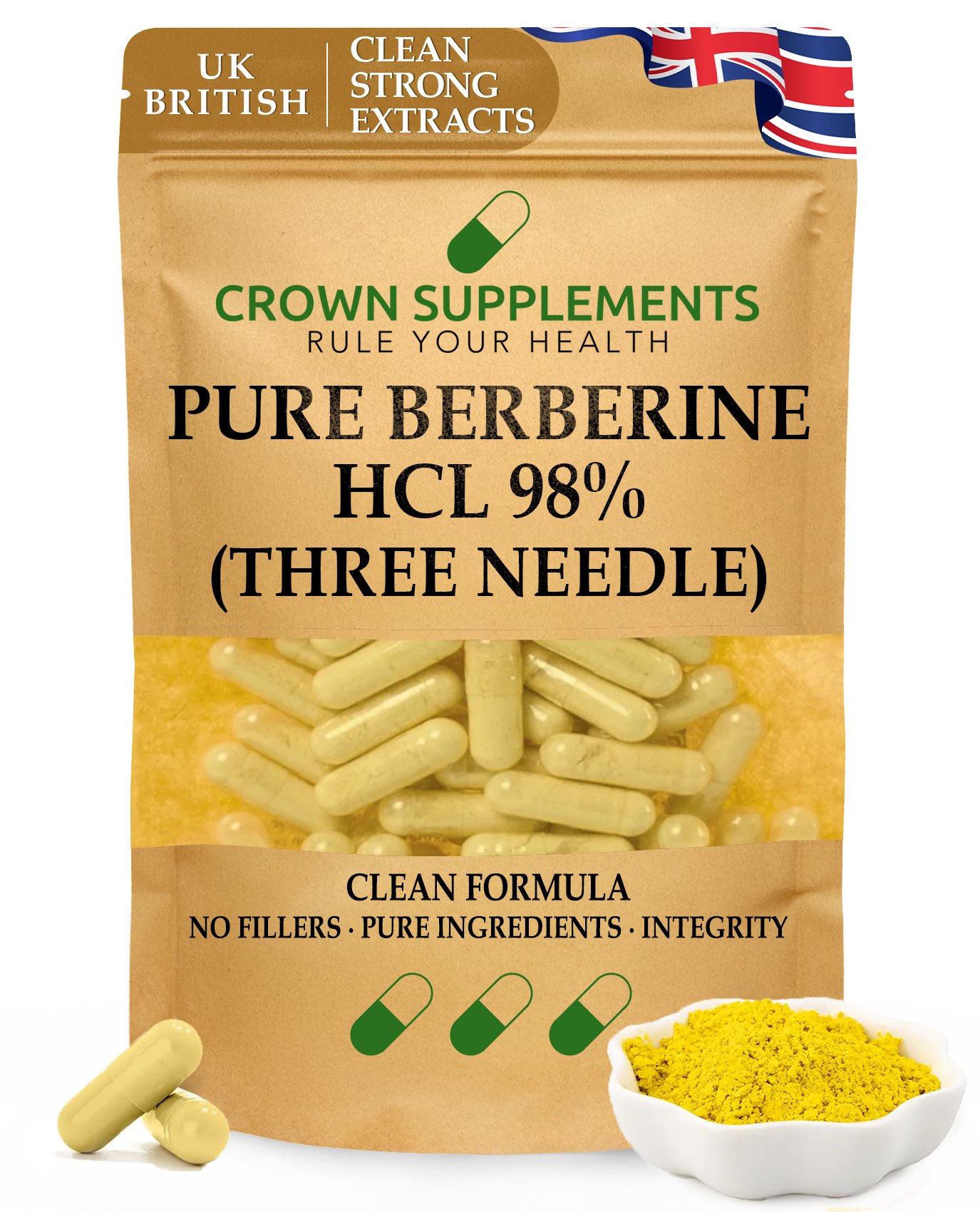
Crown Supplements angle: a clean berberine capsule should make the active ingredient easy to understand and the formula easy to judge. No filler-first thinking. No hidden blend confusion. No unnecessary extras pretending to add value.
Dosage: How Much Berberine Do Studies Use?
Dosage is one of the most common questions around berberine capsules. In human research, berberine is often studied in total daily amounts around 900mg to 1500mg, usually split into smaller servings during the day. A common study-style pattern is 500mg two or three times daily, often taken with or shortly after meals.
This does not mean every person should copy a study dose. The right approach depends on the person, the product, the capsule amount, tolerance, existing conditions and medication use. Starting low is often discussed because digestive side effects can be more likely at higher amounts.
People comparing a Berberine UK Capsule should check the product label carefully. Look for the amount per capsule, the suggested serving, whether the product is designed for daily use and whether the brand gives clear suitability guidance.
Before starting berberine, especially at higher amounts or for regular use, it is sensible to speak with a doctor, pharmacist or qualified healthcare professional. This matters even more if you take medication or are tracking medical markers such as glucose, lipids or blood pressure.
Side Effects, Suitability and Safety
Although berberine occurs naturally in plants, it is still a potent bioactive compound. The most commonly discussed side effects are digestive, including stomach cramps, diarrhoea, constipation, gas, nausea or bloating. These issues may be more likely when starting too high or increasing too quickly.
Taking berberine with meals is often discussed as a way to improve tolerance, but it does not remove the need for personal caution. If digestive symptoms are severe, persistent or unusual, stop use and speak with a healthcare professional.
Medication interaction is the biggest safety point. Berberine may interact with prescription and over-the-counter medicines because of its effects on drug-metabolising enzymes and transport proteins. This can matter for medicines used for blood sugar, blood pressure, blood thinning, immune suppression, cholesterol and other areas.
People who are pregnant, breastfeeding, trying to use berberine for infants or children, or dealing with liver or kidney conditions should be especially cautious. NCCIH notes that berberine may be unsafe during pregnancy or breastfeeding and should not be given to infants. This is why safety wording belongs on a proper berberine guide.
Berberine Compared to Metformin
You may frequently hear berberine compared to metformin, a prescription medicine used in type 2 diabetes care. This comparison exists because both are discussed in relation to AMPK and glucose-related markers in studies. However, the two are fundamentally different.
Metformin is a prescribed pharmaceutical medicine with extensive clinical use and medical supervision. Berberine is generally sold as a dietary supplement and is not regulated or prescribed in the same way. That difference matters for quality control, dosage decisions, safety monitoring and medical advice.
Berberine may be researched as part of metabolic supplement discussions, but it should never be treated as a direct substitute for a prescribed medicine unless a doctor has advised and supervised that decision.
| Feature | Berberine | Metformin |
|---|---|---|
| Source | Plant-derived alkaloid used in supplements. | Synthetic prescription medicine. |
| Regulation | Dietary supplement with variable brand quality. | Prescription drug used under medical care. |
| Main research area | AMPK, gut microbiome, glucose markers, lipid markers and metabolic pathways. | Glucose control and type 2 diabetes management. |
| Use decision | Should be checked for suitability, especially with medication. | Prescribed and monitored by a healthcare professional. |
| Safety focus | Digestive tolerance and medication interactions. | Medical suitability, dosing, kidney function and side effects. |
Considering Real-World Experiences
Searching online will reveal many personal accounts from people who have used berberine supplements. Some people describe positive experiences. Others report digestive discomfort or no obvious change. These stories can be useful as general context, but they should not be treated as reliable proof.
Individual response can vary because of genetics, baseline health, dosage, supplement quality, diet, exercise, sleep, medication and existing conditions. A capsule that suits one person may not suit another.
Scientific evidence from controlled studies gives a more objective view than personal stories online. The best approach is to combine research awareness with careful label reading and professional advice where needed.
Plant Sources and Sustainability
Understanding where the berberine in a capsule comes from is useful. Common commercial sources include Indian Barberry, Chinese Goldthread, Amur Cork Tree and European Barberry. These botanical sources are often used for berberine extracts intended for capsules.
Goldenseal has also been used historically, but it has faced harvesting pressure in parts of its natural habitat. For a responsible supplement buyer, plant source, cultivation and supply-chain transparency are sensible factors to consider.
When selecting a berberine supplement, look for brands that are clear about the extract source where possible and avoid vague sourcing language. Clean supplements are not only about what is inside the capsule, but also about whether the brand is serious enough to present the ingredient properly.
Key Considerations Before Trying Berberine
Let’s consolidate the most important points before you compare or buy a Berberine UK Capsule.
- Berberine is a plant-derived alkaloid commonly sold in capsule form.
- It is widely researched in relation to metabolic markers, AMPK, glucose pathways, lipid markers, gut microbiome interest and other specialist areas.
- Product quality varies, so the ingredient list, capsule amount and “other ingredients” section matter.
- Common study amounts are often split across the day, but personal suitability is not the same as a study protocol.
- Digestive side effects are commonly discussed, especially when starting or using higher amounts.
- Medication interactions are a serious consideration, so professional advice is important if you take medicines.
- Berberine is not suitable for everyone, including infants, and may be unsuitable during pregnancy or breastfeeding.
- Use berberine as a supplement ingredient to research and compare, not as a replacement for prescribed treatment or a balanced lifestyle.
Crown Supplements Standard for Berberine Capsules
Crown Supplements approaches berberine capsules from a clean formula perspective. The customer is not buying fillers, binders or unnecessary machine-flow ingredients. The customer is comparing the actual supplement ingredient and whether the finished capsule respects the formula.
For a berberine capsule, this means the product should make the form clear, show the ingredient properly and avoid filler-heavy thinking. A clean berberine supplement should be easy to understand on the front label and easy to check on the back label.
This is how berberine fits into the wider Crown Supplements cluster: botanical supplements, capsules, clean ingredients, pure extracts, simple formula choices and no rubbish added where it does not belong.

Berberine UK Capsule FAQs
What should I check before buying berberine capsules in the UK?
Check the berberine form, the amount per capsule, the full ingredient list, capsule material, brand transparency and whether the formula uses unnecessary fillers or binders. Also check suitability if you take medication.
Is Berberine HCL different from plain berberine?
Berberine HCL means berberine hydrochloride, a commonly used supplement form. Shoppers often compare Berberine HCL capsules because the form and capsule amount are usually clearer on the label.
Should berberine be taken with meals?
Many berberine products and studies discuss taking berberine with or shortly after meals. This can be easier for routine use and may be better tolerated by some people, but always follow the product label and professional advice where needed.
Can berberine capsules replace medication?
No. Berberine should not replace prescribed medication or professional care. This is especially important for blood sugar, cholesterol, blood pressure, liver, kidney or hormone-related concerns.
Berberine capsules should be clear to judge.
For Crown Supplements, the goal is simple: help customers compare supplements by the actual ingredient, capsule format, formula quality and what has been left out. A strong berberine capsule should not need filler-heavy formulation or confusing marketing language to look impressive.
Conclusion
Berberine is a well-known plant-derived alkaloid with a long history of traditional use and ongoing modern research. Today, many shoppers compare berberine capsules because they want a measured, convenient supplement format with clear labelling and a simple formula.
The research around berberine is interesting, especially around AMPK, metabolic markers, glucose-related pathways, lipid markers and gut microbiome questions. However, this does not make berberine a cure, a medicine replacement or a shortcut. It should be treated as a supplement ingredient that deserves careful comparison and sensible use.
For Crown Supplements, the stronger buying standard is clear: choose supplements by the real ingredient, the form, the capsule amount, the full label and the unnecessary extras that have been left out. A Berberine UK Capsule should be easy to understand, cleanly formulated and backed by responsible guidance.
