 Skip to content


Berberine Capsules: A UK Buyer’s Guide to Berberine HCL
Berberine capsules have become one of the most searched botanical supplements because shoppers want a measured, easy-to-use way to compare berberine HCL, capsule strength, ingredient quality and clean formula standards. This guide explains what berberine capsules are, why they are widely discussed, and what to check before choosing a product.
The original article looked at berberine’s research areas, practical use, side effects, capsule formats and buyer checks. This version keeps that full structure but keeps the wording measured, avoids over-promising, and gives Crown Supplements a stronger clean supplement position without turning the page into a sales pitch.
What Are Berberine Capsules?
Berberine capsules contain berberine, a naturally occurring alkaloid found in several plants. Botanical sources discussed in research include European barberry, goldenseal, Oregon grape, phellodendron and coptis. A capsule format gives people a measured way to take this strongly coloured, naturally bitter plant compound without using the raw plant material directly.
Berberine has a long history in traditional systems such as Traditional Chinese Medicine and Ayurveda. Today, berberine capsules are mainly discussed as a modern food supplement format, especially by people comparing botanical supplements, plant extracts, capsule strength and ingredient purity.
Berberine powder is yellow and intensely bitter. Capsules are popular because they hide the taste, create a consistent serving format and are easier to use in a daily routine than loose powder, tinctures or raw plant preparations. This is one reason capsule quality, capsule material and the “other ingredients” list matter when comparing berberine products.
High-authority supplement references, including WebMD’s berberine overview, discuss berberine as a plant-derived supplement with important safety and interaction considerations. That is why a good berberine capsules guide should cover both product quality and sensible use.
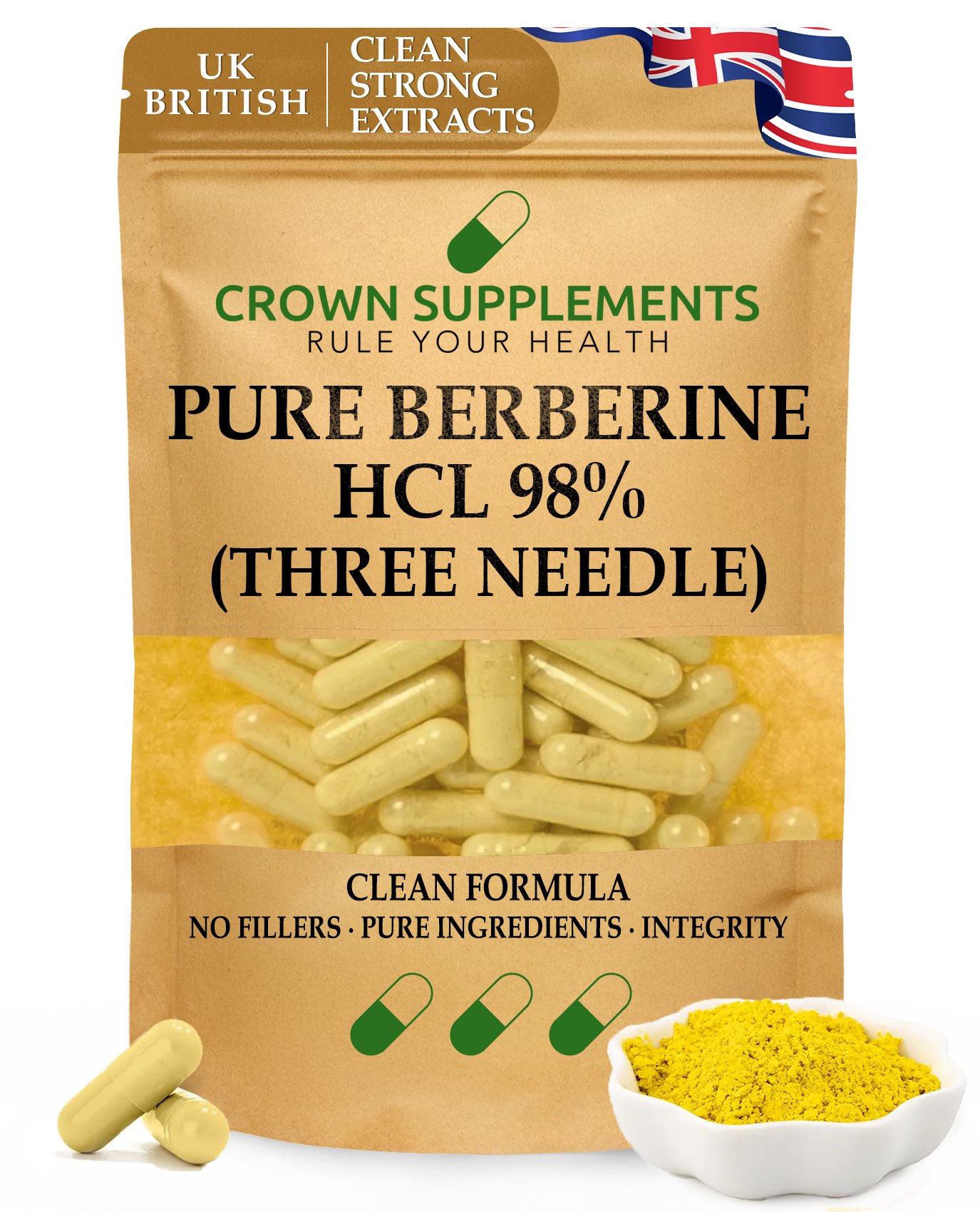
Crown Supplements position: the ingredient should be the focus. A berberine capsule should not need unnecessary fillers, binders, artificial colours, bulking agents or machine flow agents to look professional.
Berberine Capsules: How Do They Actually Work?
Berberine is frequently discussed because of its interaction with cellular pathways linked to energy use and metabolic signalling. One of the main areas researchers look at is AMP-activated protein kinase, often shortened to AMPK. This enzyme is sometimes described as a cellular energy sensor because it is involved in how cells respond to energy demand.
When people search “how do berberine capsules work,” they are usually trying to understand why berberine appears in conversations about glucose metabolism, lipid metabolism, body composition, gut bacteria and wider metabolic research. A PubMed Central review on berberine and metabolic syndrome gives a deeper research-led explanation of these pathways.
Berberine is also studied in relation to gene expression, mitochondrial function and the gut microbiome. These are complex research areas, and the most useful takeaway for shoppers is simple: compare the actual berberine form, the stated amount, the capsule quality and the extra ingredients before buying.
Thinking About Berberine Capsules? What Research Looks At
Berberine capsules are often discussed across several research areas. This does not mean a capsule should be treated as a medicine or a replacement for professional care. It means shoppers should understand the topics being studied, the limits of supplement wording and the importance of using a product responsibly.
Many people also ask whether berberine can be combined with other supplements such as fish oil, magnesium glycinate, milk thistle or other herbal products. Combination use should be approached carefully because botanical supplements can interact with medicines and with each other. A healthcare professional can help assess suitability based on your own circumstances.
1. Blood Sugar Research
One of the most searched topics around berberine is blood sugar research. Many studies look at berberine in relation to glucose metabolism, insulin signalling and markers such as fasting glucose or HbA1c. This is also why berberine is often compared with ingredients and routines used by people tracking metabolic markers.
Some clinical studies have compared berberine with established medicines in controlled settings, but berberine capsules should not be treated as a replacement for prescribed medication. Anyone using medication for blood glucose should speak with a healthcare professional before using berberine because overlapping effects may require monitoring.
For a supplement buyer, the useful point is not to chase exaggerated blood sugar claims. The useful point is to understand that berberine is a researched plant compound and that quality, dose format, professional guidance and consistency all matter.
2. Cardiovascular Marker Research
Berberine is also discussed in research around cholesterol, triglycerides, endothelial function and wider cardiovascular markers. These topics are common in scientific literature because metabolic health, lipid metabolism and cardiovascular risk markers are closely connected.
Some research discusses mechanisms such as PCSK9 activity, LDL receptor behaviour and fat metabolism. These are technical areas, but they explain why people comparing berberine capsules often want a product that clearly states the form and amount rather than hiding behind vague “wellness” wording.
Any person with cardiovascular concerns or medication use should not self-manage with supplements. The safer approach is to treat berberine as a concentrated botanical food supplement that should be considered alongside professional advice where relevant.
3. Weight Management Research
Berberine appears in weight management searches because of its connection with AMPK, glucose metabolism and fat metabolism research. This is also why some online discussions call it a metabolic supplement. However, sensible wording matters: berberine capsules are not a shortcut, and they should not be framed as a weight loss cure.
Some studies have looked at body weight, BMI, waist measurement and lipid markers over several weeks. These studies are useful for research context, but individual outcomes vary. Diet, activity, sleep, medical history and medication use all change the bigger picture.
For Crown Supplements, the buying angle is formula quality. If someone is comparing berberine capsules for a structured routine, the product should be clean, clearly labelled and not padded with ingredients that do not belong in the capsule.
4. Gut Health and Microbiome Research
Berberine has a long traditional use history connected with digestion, and modern research looks at how it interacts with the gut microbiome. This includes interest in microbial balance, intestinal barrier function and digestive comfort, although these areas should be described carefully and not as guaranteed outcomes.
Berberine’s relationship with the gut is complex. It is discussed because it may influence certain microbial populations and gut-related pathways. That does not mean it is suitable for every digestive concern or every person. People with ongoing digestive symptoms should seek proper advice rather than relying on a supplement alone.
When comparing berberine capsules, check whether the product is built around the active ingredient or whether the formula is bulked out with unnecessary extras. The capsule should be there to deliver the ingredient cleanly, not to hide a weak formulation.
5. PCOS Research
Polycystic Ovary Syndrome, often shortened to PCOS, is another area where berberine is studied because PCOS is often discussed alongside insulin resistance and metabolic markers. This topic is common in searches because people want to understand the difference between research interest, supplement use and medical treatment.
Some studies compare berberine with other interventions in relation to glucose and lipid markers. Others examine body composition or hormone-related markers. These areas remain specialist and should be approached with professional guidance, especially if medication is involved.
For a buyer guide, the key point is not to make a PCOS claim. The useful point is to explain why berberine appears in PCOS research and why product quality, clean formulation and medical suitability checks matter before use.
6. NAFLD Research
Non-alcoholic fatty liver disease, commonly shortened to NAFLD, is discussed in berberine research because of its links with body weight, insulin resistance, lipid metabolism and metabolic syndrome. Some animal studies and preliminary human studies have explored liver fat markers and related metabolic outcomes.
This is a developing research area, not a reason to use berberine as a liver treatment. If someone has liver concerns or abnormal liver markers, they should work with a healthcare professional. Berberine also has interaction considerations, so suitability is important.
From a supplement-buying angle, a serious berberine capsule should make the ingredient and dose format easy to understand. A clean formula is especially important for shoppers who are already paying close attention to what goes into their routine.
7. Inflammation and Antioxidant Research
Berberine is studied in relation to inflammatory pathways, oxidative stress markers and antioxidant activity. These are broad biological research terms, and they should not be turned into direct claims that a capsule treats inflammatory disease or prevents long-term illness.
Laboratory and animal research often looks at pathways such as NF-κB, cytokine signalling and cellular oxidative stress. Human studies are more complex and need careful interpretation. The most responsible wording is to say berberine is a plant compound being researched in these areas.
This is where strong product standards become important. A berberine capsule should not need artificial colours, cheap bulking agents or unnecessary manufacturing shortcuts. Crown Supplements focuses on clean formulas because customers are paying for the ingredient, not the filler.
| Research area | Why it appears in berberine searches | Common study context |
|---|---|---|
| Blood sugar and glucose metabolism | Berberine is widely studied in relation to AMPK, insulin signalling and glucose markers. | Many studies use divided daily amounts, often around 900mg to 1500mg per day, but this is research context rather than personal dosage advice. |
| Lipid and cardiovascular markers | Research discusses cholesterol, triglycerides, PCSK9 and lipid metabolism pathways. | Studies vary in dose, duration and participant group, so interpretation should stay measured. |
| Weight management research | Berberine is discussed because of metabolic signalling and body composition research. | Research commonly combines supplement use with diet or lifestyle context. |
| Gut microbiome research | Berberine is studied for its relationship with microbial balance and gut-related pathways. | Suitability can vary, especially for people with ongoing digestive symptoms or medication use. |
| PCOS and NAFLD research | These topics are linked with metabolic markers, insulin resistance and lipid metabolism. | Professional guidance is important because these are medical conditions, not simple supplement categories. |
How to Take Berberine Capsules

If you are considering berberine capsules, the practical questions are usually about serving size, timing, consistency and suitability. Research studies often use divided daily amounts, but product labels and professional guidance should come first.
Many studies use total daily amounts around 900mg to 1500mg, usually split into two or three servings. For example, a study may use a 500mg capsule two or three times per day. This does not mean every person should use that amount, and it does not replace professional advice.
Berberine is often taken with or shortly after food in studies and supplement routines. This may be more comfortable for some people because digestive side effects are among the most commonly reported issues. Starting lower and assessing tolerance is a sensible discussion to have with a healthcare professional.
Longer use should be approached carefully because long-term safety data is more limited than short-term study data. Anyone using medication, managing a health condition, pregnant, breastfeeding or unsure about suitability should seek professional advice first.
Potential Side Effects and Precautions
Berberine is a concentrated bioactive plant compound, so safety matters. The most commonly reported side effects are digestive, including stomach discomfort, diarrhoea, constipation, gas or nausea. These may be more likely when starting at a higher amount.
Berberine can interact with medicines because it may affect liver enzyme pathways and drug transporters. This is especially important for people taking medicines linked to blood glucose, blood pressure, blood thinning, immunosuppression, cholesterol, infection treatment or other regular prescriptions.
The NCCIH berberine safety overview notes medicine interactions and digestive side effects, while Memorial Sloan Kettering’s berberine monograph gives further detail on potential herb-drug interactions.
Berberine is generally not considered suitable during pregnancy or breastfeeding, and it is not a casual supplement for children. People with liver or kidney conditions should only consider berberine with medical guidance.
Choosing Quality Berberine Capsules
The berberine market is busy, and quality can vary. A strong berberine capsule should make the active ingredient clear, identify the form, show the amount per serving and avoid unnecessary filler-heavy formulation.
Berberine HCL, or berberine hydrochloride, is a common form used in many studies and supplements. When comparing products, look at the full label instead of only the front of the pouch. Check capsule material, serving size, plant source, storage instructions and the other ingredients list.
A clean formula matters because customers are buying berberine, not magnesium stearate, silicon dioxide, artificial colours, unnecessary bulking agents or machine flow agents. Crown Supplements’ approach is simple: keep the formula focused on the ingredient and avoid filler-first thinking.

- Look for clearly stated berberine HCL or berberine extract information.
- Check the amount per capsule and the recommended serving.
- Read the “other ingredients” section before buying.
- Avoid filler-heavy capsules when a cleaner formula is available.
- Be cautious with dramatic claims that sound like medical promises.
Berberine Capsules vs. Other Forms of Berberine
Berberine is available as capsules, tablets, powders and liquid extracts. Capsules are popular because they are measured, easy to store, convenient to take and avoid the intense bitterness of loose berberine powder.
Tablets can also be convenient, but they may rely more heavily on binders and manufacturing aids. Powders offer flexibility but are less pleasant for many people because of the taste. Liquid extracts may be useful for some supplement users, but serving consistency can vary by product and dropper accuracy.
For many Crown Supplements customers, capsule format makes sense because it keeps the routine simple. The real quality check is whether the capsule is built around a clean formula, with the ingredient clearly stated and unnecessary extras left out.
Combining Berberine Capsules with a Healthy Lifestyle
Berberine capsules should be understood as one part of a wider routine, not the routine itself. People researching berberine often also look at food choices, activity, sleep, hydration, stress management and overall consistency.
A nutrient-dense diet, regular movement and sensible professional guidance create the context in which any supplement decision makes more sense. Berberine capsules are best compared as a food supplement format rather than a replacement for basic lifestyle foundations.
This matters for user intent because most people searching for berberine capsules are not just looking for a definition. They want to know what to buy, how to compare labels, when to be cautious, and whether a clean formula is worth choosing over a cheaper filler-heavy option.

Berberine Research: What Is Being Studied Next?
Scientific interest in berberine continues because it interacts with several biological pathways. Researchers are studying its relationship with the gut microbiome, metabolic markers, AMPK, mitochondrial function, inflammatory pathways and other areas.
Some laboratory and animal research also examines highly specialised areas such as cell signalling and neurological pathways. These should be understood as research topics, not as reasons to use berberine capsules for serious conditions.
As research develops, the practical buying principles remain the same: choose a clear berberine form, understand the serving instructions, check suitability, avoid medicine replacement thinking, and buy from a brand that takes formula quality seriously.
Frequently Asked Questions
Can I take berberine capsules long term?
Modern clinical trials are often measured in weeks or months, while long-term daily use has less data. Long-term use should be discussed with a healthcare professional, especially if you use medication or have an existing health condition.
How long does berberine take to show measurable changes?
Research studies often assess markers over several weeks or months. Individual outcomes vary, and lab markers should be reviewed with a qualified professional rather than judged only by how someone feels.
Does berberine interact with coffee or caffeine?
There is no strong evidence of a major direct interaction with coffee, but both coffee and supplements can affect digestive comfort in sensitive people. If you notice discomfort, adjust timing and speak with a professional if needed.
Can berberine replace my prescribed medication?
No. Berberine capsules should not replace prescribed medication unless a healthcare professional specifically advises changes. This is especially important for blood glucose, blood pressure, cholesterol, blood thinning and immunosuppressant medication.
Is berberine the same as metformin?
No. Berberine and metformin are different substances. They may appear in similar research conversations because both are discussed in relation to AMPK and metabolic markers, but they are not interchangeable.
What is the difference between berberine HCL and regular berberine?
Berberine HCL is the hydrochloride salt form of berberine. It is commonly used in supplements and appears frequently in research and product formulations. When buying, check the label so you know exactly which form is being supplied.
Is berberine researched for inflammation?
Berberine is studied in relation to inflammatory pathways and oxidative stress markers. This should be described as research context, not as a treatment claim. People with inflammatory conditions should seek professional advice.
What should I check before buying berberine capsules?
Check the form, amount per capsule, capsule material, serving instructions, plant source, other ingredients and whether the brand uses unnecessary fillers, binders or flow agents. A clean formula is easier to judge.
High-Authority References Used
These external references are included to strengthen trust and give readers places to understand berberine research and safety in more detail. They are not competitor supplement pages and are not used as sales claims.
Berberine capsules should be clean, clear and serious.
Crown Supplements is focused on clean supplement formulas where the ingredient is the point. For berberine capsules, that means clear berberine HCL positioning, clean capsule thinking, no fillers, no binders, no unnecessary bulking agents, no artificial colours and no machine flow agents added just to make manufacturing easier.
Conclusion
Berberine capsules offer a measured and practical way to use a plant compound with a long traditional background and a growing body of modern research. The strongest way to understand berberine is not through exaggerated promises, but through the details that matter: the form, the amount per serving, the capsule type, the safety considerations and the quality of the finished formula.
For shoppers comparing berberine capsules, Crown Supplements keeps the focus on clean formula standards. Pure Berberine HCL 98% Three Needle capsules should be judged by clear labelling, simple formulation and the absence of unnecessary fillers, binders, artificial colours, bulking agents and machine flow agents.
Berberine should be considered responsibly, especially where medication, pregnancy, breastfeeding or existing health conditions are involved. Used within a sensible routine and with professional guidance where needed, it remains one of the most researched botanical supplement topics and an important part of the wider Crown Supplements clean supplements cluster.

